
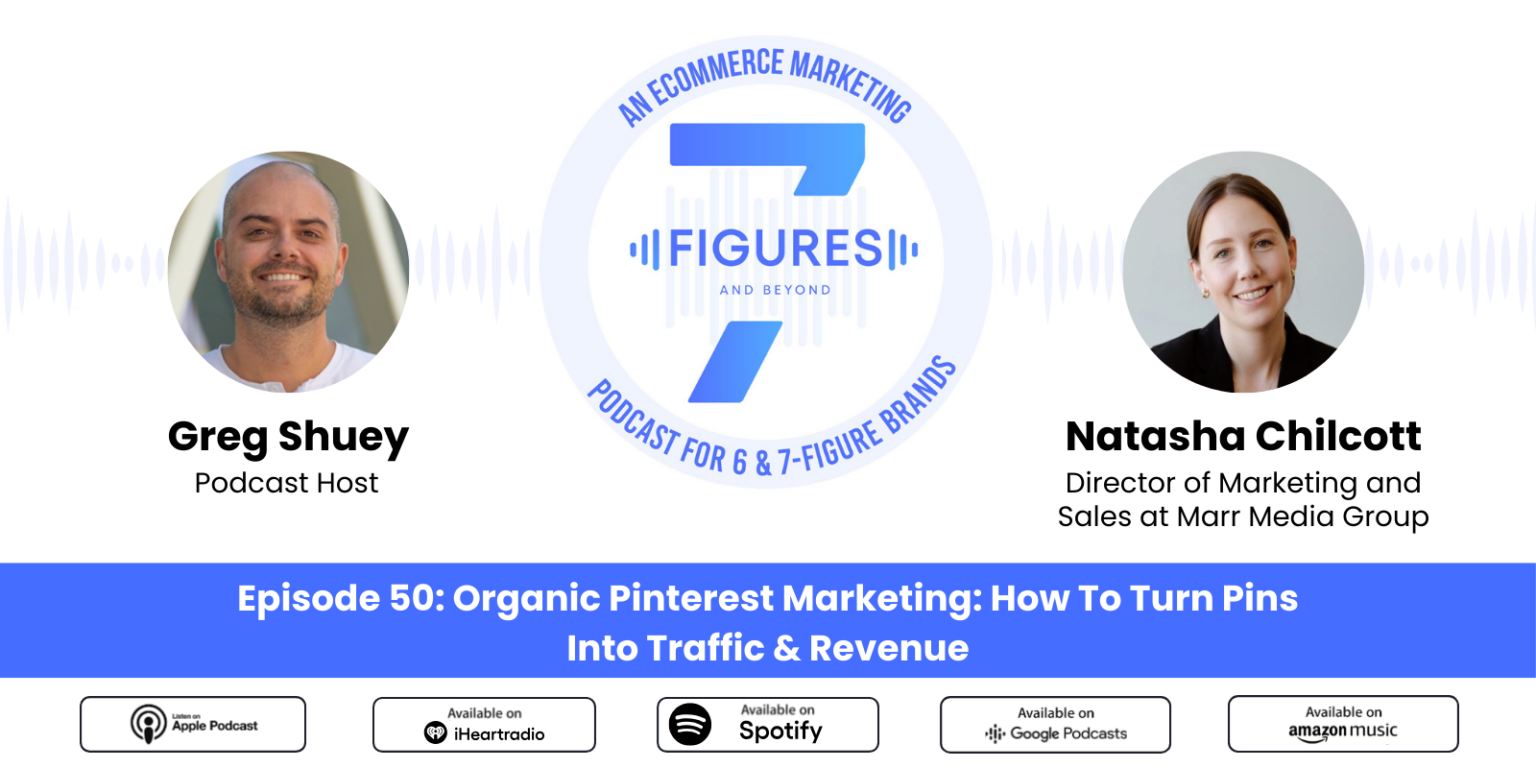
Most DTC brands treat Pinterest like a secondary Instagram. They post their studio product shots, set up a few boards, and wonder why nothing moves. Natasha's conversation with Greg Shuey on the 7 Figures and Beyond podcast starts by explaining why that approach is built on a fundamental misread of the platform.
Pinterest is not a social media platform. It's a search engine. That single distinction changes everything about how you use it.
On Instagram and TikTok, you're interrupting someone's feed. They didn't come looking for you. You're competing for attention in a stream of things they're already engaged with. On Pinterest, someone opened the app because they're looking for something. They're searching. They're planning. They're in the mindset of someone who is actively moving toward a purchase decision. That's a different person to talk to, and the content that reaches them has to work differently.
Natasha is direct about what most brands are doing wrong. They post product images in isolation. A water bottle on a white background. A coffee table shot from the studio. Clean, professional, and completely uninteresting to someone on Pinterest. Because Pinterest users aren't searching for your product. They're searching for inspiration around the problem your product solves. Show that same water bottle as part of a workout outfit. Put that coffee table into a living room setting that fits a search like "modern fireplace ideas." Now you're creating something worth saving, sharing, and acting on.
The content strategy Natasha runs for her clients starts with keyword research using Pinterest's own tools. Pinterest Analytics shows you what people in your category are actually searching for. Pinterest Predicts gives you trend forecasts. Pinterest Presents covers platform best practices for the year ahead. Most brands don't use any of these. They post based on what they think looks good and then audit the results when growth stalls. Starting with what the audience is searching for and working backward into content is a simpler and more effective direction.
One thing Natasha says that's worth pausing on: Pinterest content doesn't expire. A pin you posted two years ago can still drive traffic today. That's not how TikTok or Instagram works, where a post's useful life is measured in hours. The long shelf life of Pinterest content changes the economics of the investment. The work you put in compounds rather than disappears.
Volume matters but not at the expense of quality. The range Natasha targets is five to twenty-five pins per day, a mix of original content and repinned material. That number tends to surprise people, but the point is consistency and platform engagement, not just output. She's clear that using Pinterest as a one-way broadcast channel, just posting without engaging with other content on the platform, limits visibility. The platforms reward accounts that behave like genuine participants.
The 80/20 rule runs through how Natasha approaches content testing. Eighty percent of output goes toward formats and categories already showing results. Twenty percent goes toward testing new things. When something in the twenty percent starts performing, it moves into the eighty. When something in the eighty stops working, it gets cut. This isn't a rigid framework. It's a discipline for avoiding the comfort trap of repeating what used to work past the point where it still does.
The part of the episode that stays with me is Natasha's description of how she runs content strategy in short sprints rather than annual plans. The overarching strategy covers positioning, audience, tone, and content categories. That stays stable. The actual content, the specific pins, the formats, the timing decisions, gets reviewed and adjusted monthly based on what the platform and the analytics are showing. Most agencies build a content plan and execute it. Natasha's team builds a direction and navigates in real time.
Natasha closes with something that sounds simple but is harder to maintain than most brands expect. Before you plan any piece of content, ask how it's valuable to someone. What journey are they on when they find it? What are you trying to get them to do? Lead with value and then connect it to a CTA. That order matters. On Pinterest, where the user arrived with intent, content that starts by serving them moves product. Content that starts by promoting a product mostly gets scrolled past.
Related Articles
.webp)
This guide is a step-by-step blueprint for consumer product brands looking to turn their happiest customers into powerful brand affiliates. By leveraging social media, brands can create a cost-effective, high-converting affiliate program that generates organic word-of-mouth marketing.


.jpg)