
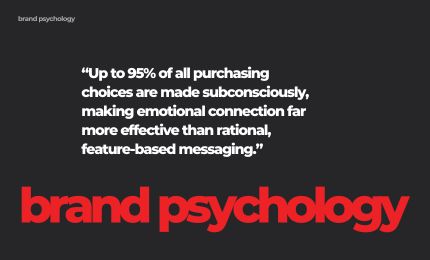
Up to 95% of purchasing choices are made subconsciously.
Read that again, because it means your beautifully designed posts are pitching to the 5% of the brain that wasn't invited to the decision. This is what I recently made our entire team sit through for an hour, quizzes included, and even an orange juice story that we'll all be remembering for campaigns to come. The fix is a generational marketing checklist, six questions you run before anything goes live.
Before we give you the checklist, which is at the bottom of this blog post, we want to showcase the reasoning behind it, so you actually understand what generational marketing means for social before you're asked to run it.
It starts with brand psychology, the study of why people feel a certain way about a company before they think about it. And at its core, it's about shortcuts. Brands aren't logos. They're shortcuts the brain uses to avoid re-deciding every single time. Instead of asking "is this the best product," your brain asks the much easier question, "do I trust this brand," and answers that instead. You've maybe never bought Dawn dish soap in your life, but if it's the smell of your childhood kitchen, your hand knows where it's going. And when in doubt, we transfer the risk: you buy the real Cheetos instead of the no-name bag because if it disappoints, that's Cheetos' fault, not your judgment. The brain is lazy, sure, but it's efficient lazy, and your job as a content creator is to be the shortcut.

Here's the thing most people don't understand, but it has such a big implication for everything else in this piece.
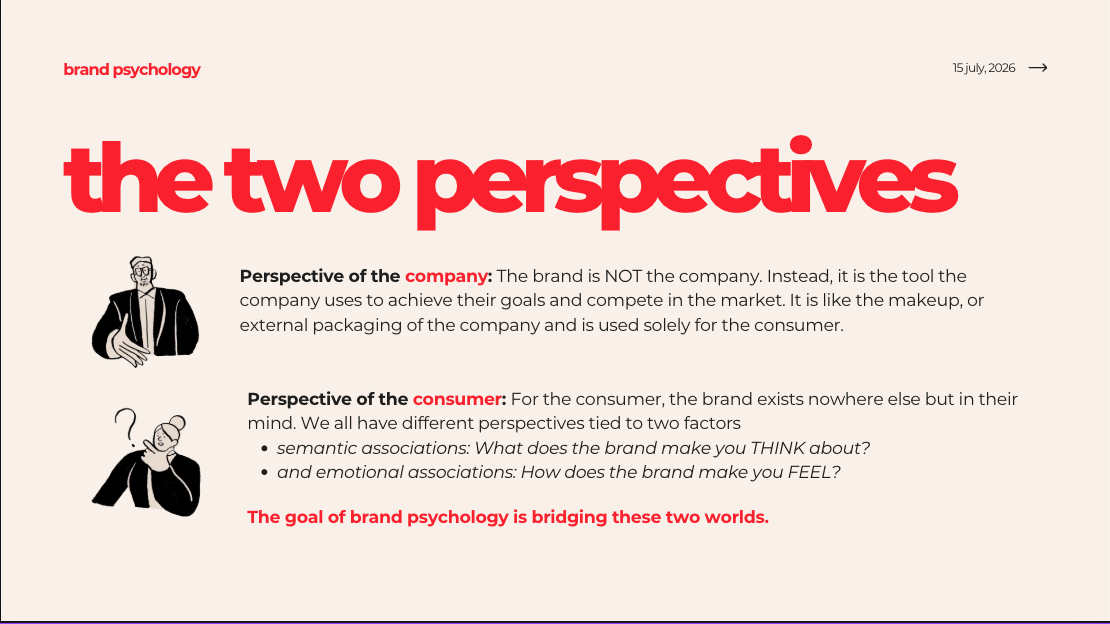
The brand isn't the company. It's a tool the company builds to compete, the makeup, the packaging, the thing aimed entirely at getting someone else to choose you. That's the company's side, and it's the one everyone in the building spends all day perfecting.
But the consumer never sees it that way. For them the brand doesn't exist in your building at all, it exists nowhere but in their own head, built out of what it makes them think and what it makes them feel. The company controls the message. The consumer controls the feeling. Closing that gap is the whole job, and it's why the same brand can look completely different depending on who's standing in front of it.
Which is exactly where the generational checklist earns its keep. Most creatives already get this instinctively. Where it falls apart is approval, because leadership signs off on designs too, and that sign-off is just as generationally biased as the audience's reaction is. A Boomer VP greenlighting a Gen Z ad based on what looks "credible" to him is the company perspective quietly overruling the consumer perspective, and nobody in the room notices it happening.
So the fix starts before the checklist. Know who your actual customer is and what they'd respond to, then design for them, not for the boardroom.
Which raises the obvious question: who exactly are you designing for? Because there's such a thing as generational context. As the psychology doesn't change generation to generation, but what counts as a trustworthy signal does. And those signals fire from the environment the generation grew up in. Below, we outline these trust signals for each generation. As you read them, think about which one relates to you.

One warning before you sprint off to write lowercase captions: don't force generational lingo. A Gen X brand suddenly speaking fluent Gen Z is always, and I mean always, six months too late, and both audiences will roast you for it.
Ask Tropicana. The goal was sensible: modernize the brand, simplify the packaging, appeal to younger consumers, keep the loyal ones. The execution was a million-dollar minimalist redesign.
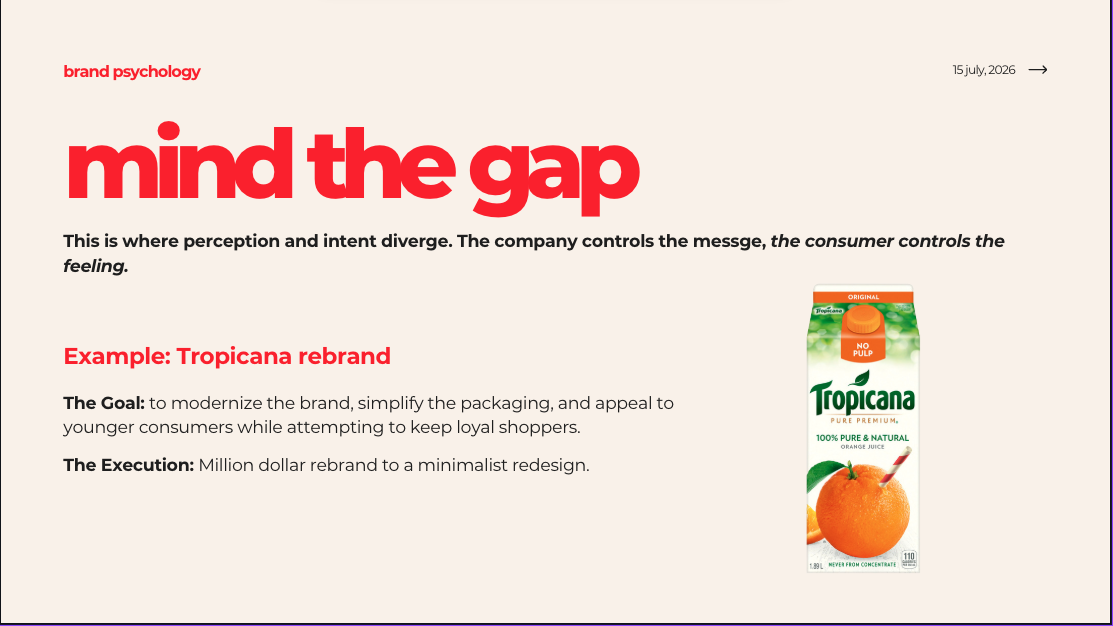
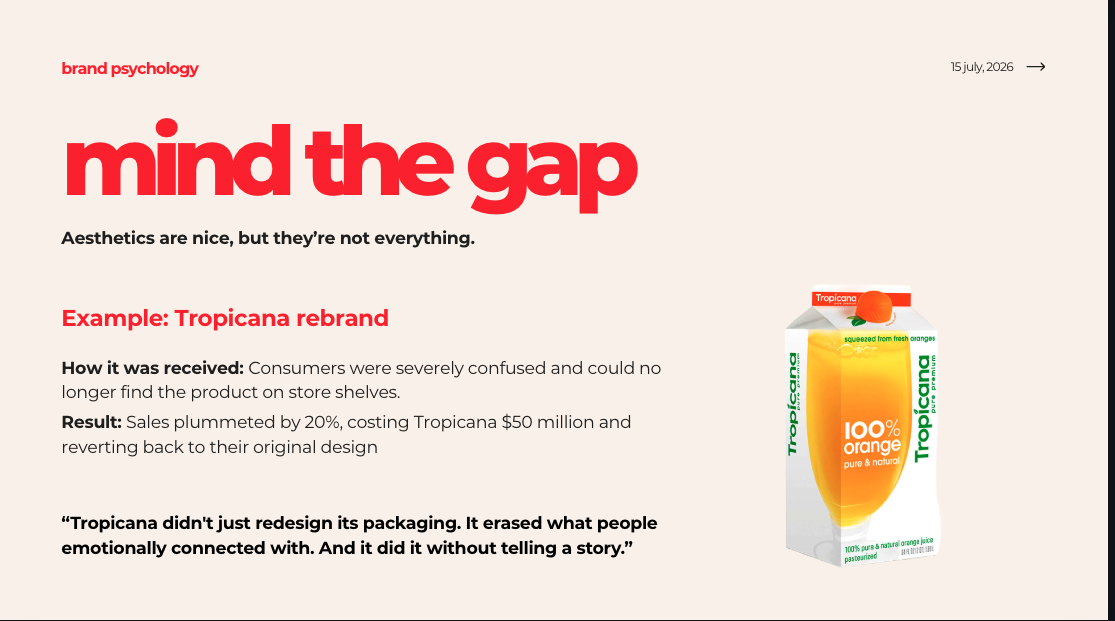
The result: shoppers couldn't find their own orange juice on the shelf, sales plummeted 20%, the adventure cost Tropicana $50 million, and they crawled back to the original design. As one brand specialist put it, "Tropicana didn't just redesign its packaging. It erased what people emotionally connected with. And it did it without telling a story." Aesthetics are nice, but they're not everything.
Voice is the who, your brand's personality, consistent and unchanging. Tone is the how, the emotional inflection, and it flexes with the message. You already know this instinctively, because you can guess a brand from one line. Give it a try with the below brand voices:

Well the first one can only be Old Spice, the second is Burt's Bees, and the last one of course, could only be Red Bull. Same exercise, but give it a try for your brand: if we covered the logo by a brand messaging, would anyone know it's you?
Here are five psychologial levers to trigger your consumers into action, and they're endlessly reusable.

The answers tell you whether you're on brand and targeting correctly. If your trigger is built for Millennials and your audience is Gen Alpha, rework the trigger, not the budget. Then match the placement, the discount code goes on Facebook for Millennials, the social proof goes on TikTok for Gen Z.
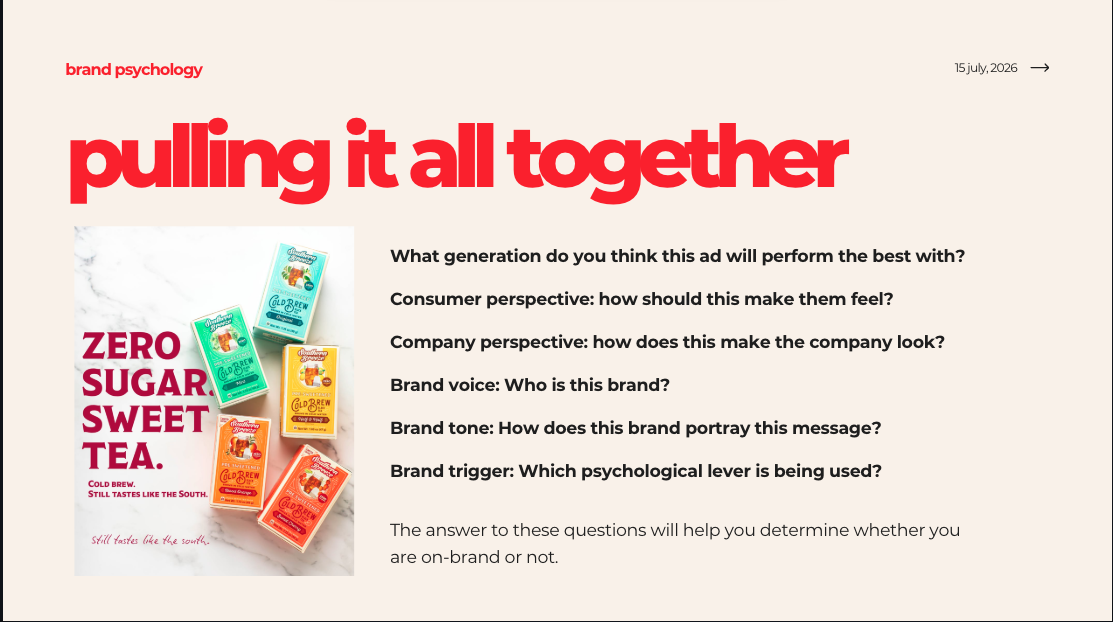
The company controls the message. The consumer controls the feeling. Connecting those two is our job in social, as content creators. And that means creating content aimed at the 95% of consumer decision making, the subconscious. To do that, we create for the feeling, influence the shortcuts of the consumers brain, and turn that shortcut into action.
Related Articles
.webp)
This guide is a step-by-step blueprint for consumer product brands looking to turn their happiest customers into powerful brand affiliates. By leveraging social media, brands can create a cost-effective, high-converting affiliate program that generates organic word-of-mouth marketing.




.jpg)