
Your audience is already in the comments. Are you?
Some of the best brand moments on social right now aren't happening on brand accounts. They're happening in the comments of other people's posts. (Yes, really.)
Social media isn't just about posting. It's about joining conversations, too. Your audience is already in the comments of someone else's video, bonding over the same struggle.
Take one of our clients, Alibris, an online marketplace for new, used and hard-to-find books. During exam season, students turn to StudyTok to share their stress and find people who get it. One of Alibris's comments has 19.9K likes and rising.
That got me thinking about how brands can use timing to get noticed without forcing their way into a conversation.
Here's how peak attention moments and outbound commenting work, and how you can put them into practice. 🤠
Every audience has moments when they get LOUD online. They're more emotional, more chatty, and all going through the same thing at the same time.
Think exam season. The first snowfall. Game day. The January gym membership we all swear we'll use this time. (We won't. But we will talk about it.)
During these moments, people tag their friends, share their stories and read the comments. They're looking for people who get what they're going through.
And no matter how niche your brand is, your audience has moments like these. You just have to find them.
Social is all about attention. Getting your brand in front of the right people builds familiarity and makes you easier to remember when they need what you offer. That's mental availability.
Peak attention moments give you a chance to build it by joining conversations your audience is already having, without forcing a sales pitch.
The more consistently people encounter your brand, the more familiar it becomes. It's the mere-exposure effect in action: repeated exposure can help people recognise and remember you.
So, when you make someone laugh while they're spiralling over finals, you're doing more than collecting likes. You're giving them a reason to remember Alibris when they need their next textbook. (Pretty iconic if you ask me.)
Outbound commenting is when your brand comments on other people’s posts and videos, not just its own. Also very iconic. Posting and hoping your audience magically appears isn’t a strategy. (If only.)
Your audience already follows influencers, niche creators and random accounts that interest them. Instead of waiting for them to come to you, go where their attention already is. Think friend sliding into the group chat, not salesperson knocking on the door.
It works for three reasons:
Combine outbound commenting with peak attention moments, and you're joining conversations when people are already talking about the things that matter to them. Your brand gets more opportunities to be seen, shared and engaged with.
But there's always a catch. Force your way into a conversation where your brand doesn't belong, and that attention can work against you. So please, add to the conversation, don't hijack it. 🙅
Okay, here's where it gets good. For Alibris, timing is everything. Back to school, syllabus week, midterms and finals are when students turn to social media to share their stress, celebrate small wins and find people are in those shared moments.
That's where I show up: StudyTok, UniTok, BookTok, exam-stress videos, relatable POVs and library-life TikToks and Reels.
I drop a relatable comment, share a laugh or even my own take on the student struggle. It's about showing there's a human behind the brand who gets it, not just a bookseller trying to sell books.
Here's what that looks like in action. 👇
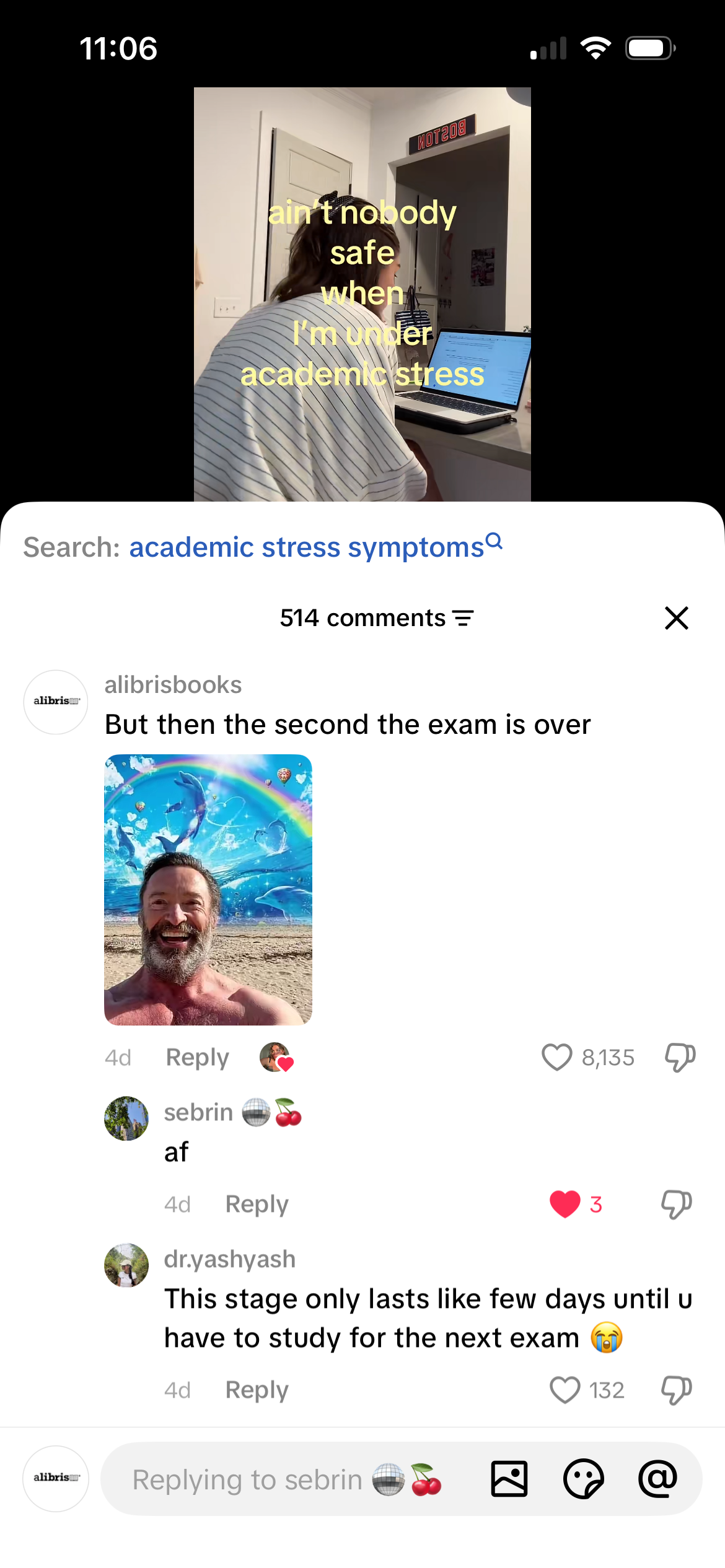
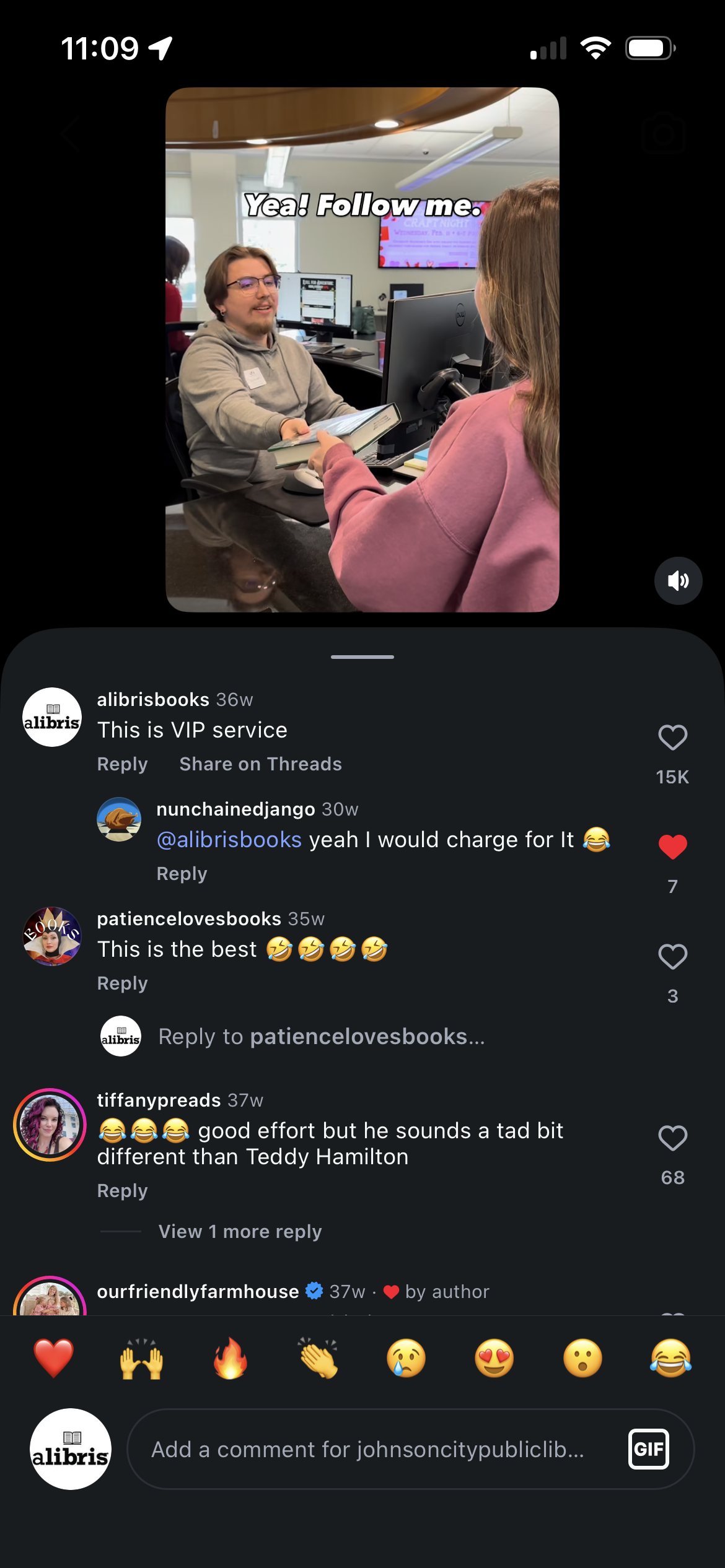
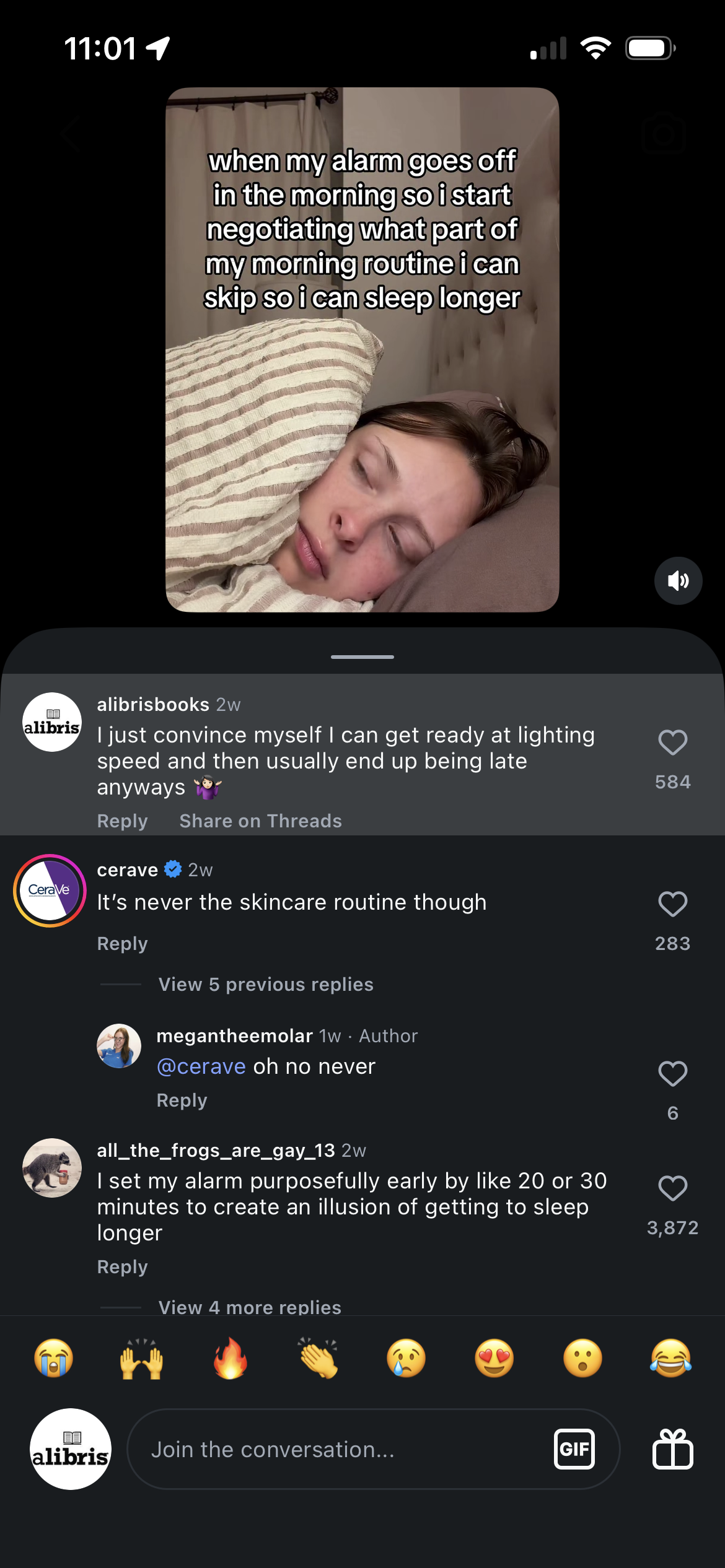
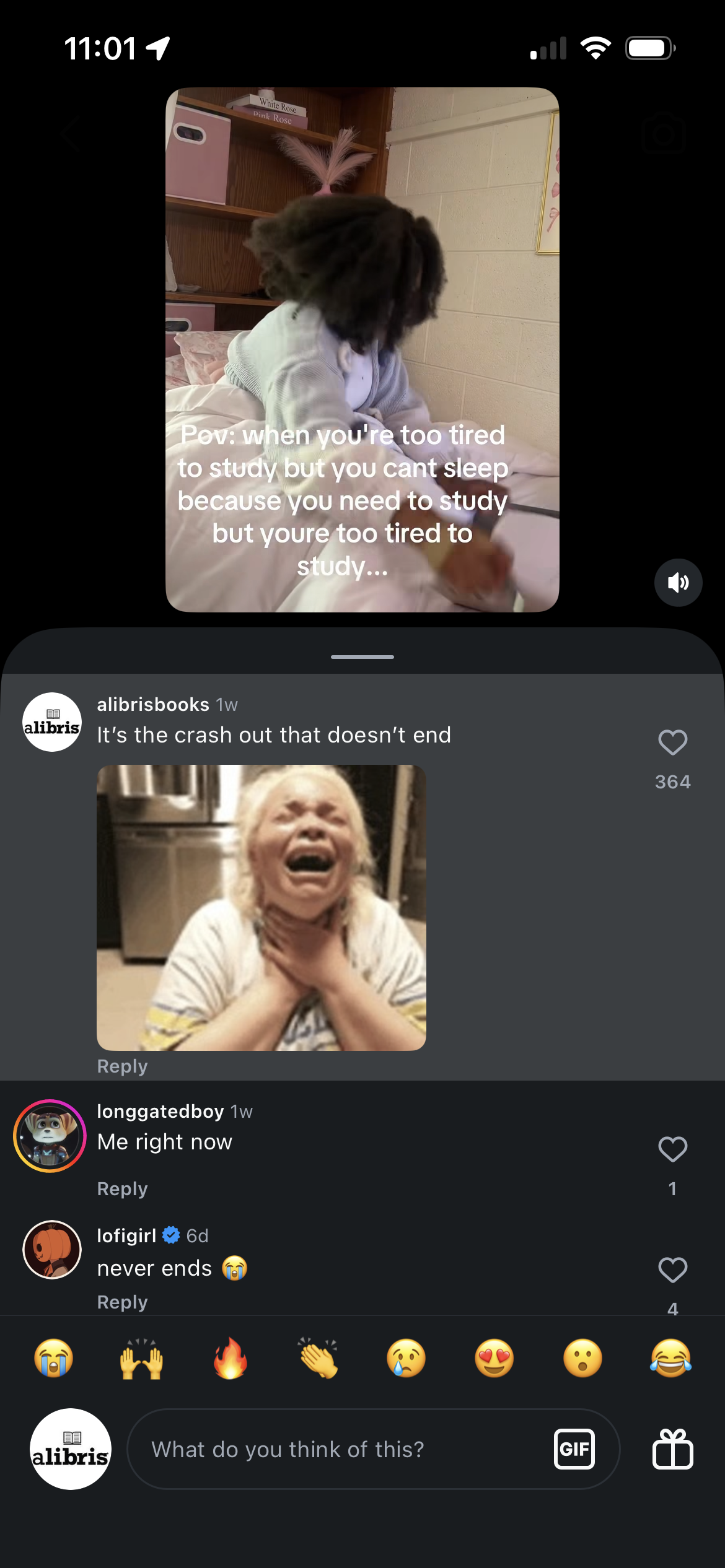
Not one of these comments mentions what Alibris offers. So why do they work? They're funny, simple and capture feelings everyone in the thread can relate to. By showing up in these moments, Alibris builds a connection with its audience before they even need what the brand offers.
And we're not alone in there. On that same alarm video, CeraVe left a comment too. CeraVe got 283 likes. Alibris got 584. Same thread. Same audience. $0 ad spend 💅
Quick tip: If a big brand is already in a thread, that's a good sign. They've done some of the audience homework for you, so you know you're probably in the right room.
Alibris has one advantage: students get handed their calendar. Their big moments are printed right on the syllabus, so we added them to Alibris's marketing calendar.
Your audience has peak attention moments too. You just need to find them and map them to your marketing calendar.
It's easy, just think through your customer's year. What are they excited about? Stressed about? Complaining about online? Look beyond the big holidays, too. Some of the best opportunities are the smaller, recurring moments other brands overlook.
Need a starting point? Here are a few moments to get you thinking:
Your next peak attention moment is probably closer than you think. (Hello, holiday season.)
Pick one. Find three videos about it this week (bonus points if they are about a super niche or relatable experience), read the comments and leave one of your own. Then do it again tomorrow.
And when a video makes you laugh, don't overthink it. Your first thought might just be your best marketing. 🤠
Related Articles


This guide is a step-by-step blueprint for consumer product brands looking to turn their happiest customers into powerful brand affiliates. By leveraging social media, brands can create a cost-effective, high-converting affiliate program that generates organic word-of-mouth marketing.