A community marketing lesson from a folk festival activation.
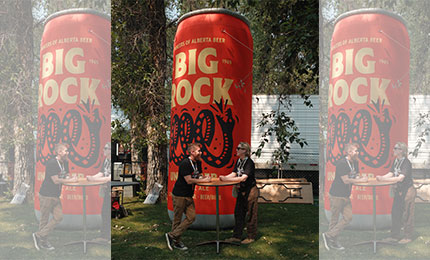
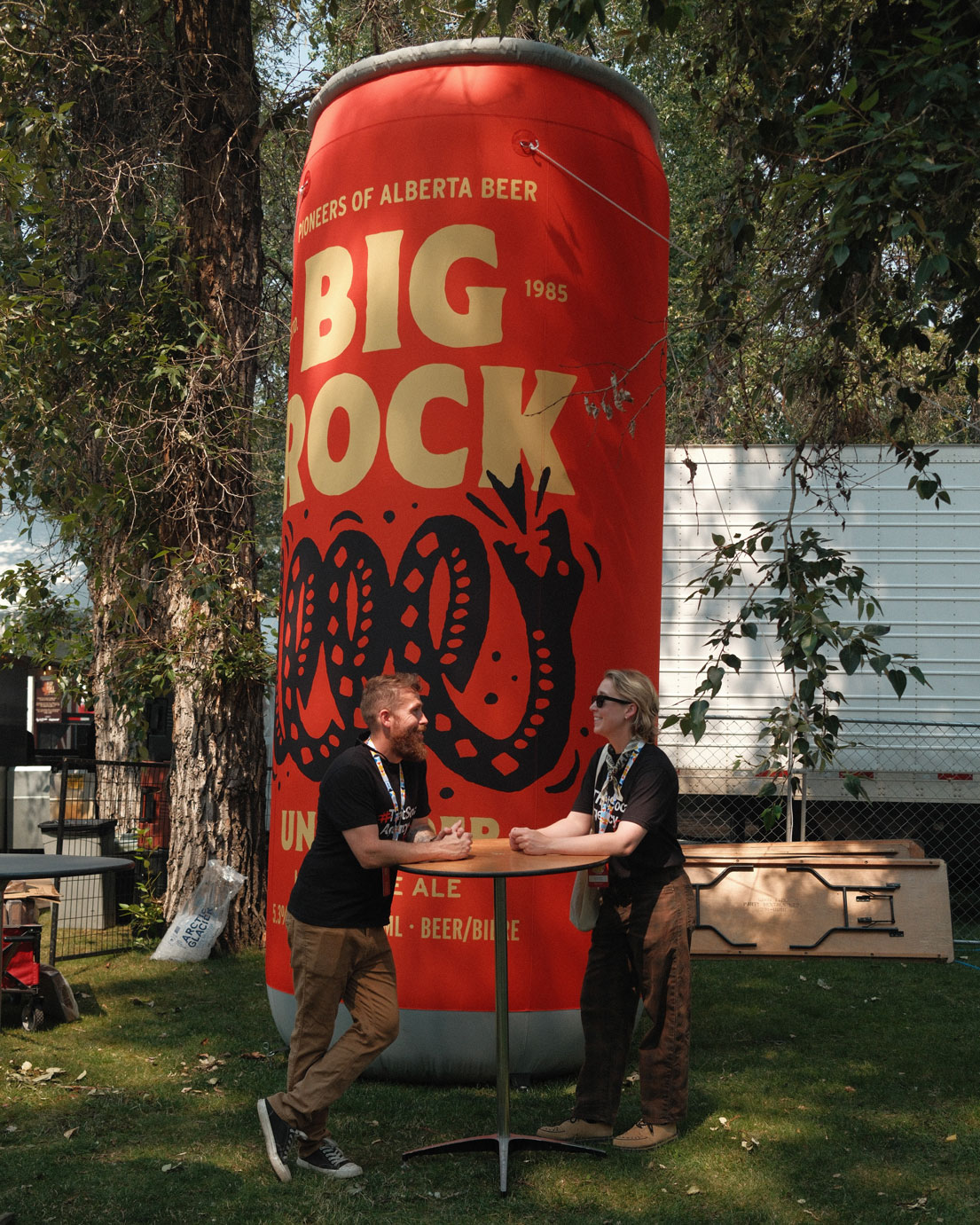
Picture a tent on a summer afternoon at the Calgary Folk Music Festival. Mariel Buckley is playing a few feet away, the whole place smells faintly of Routine, Big Rock Brewery is handing out chilled beers, and there's a line at our photo area that keeps reforming as people cycle through.
The people at the event are the ones who fund this festival year-round, the donors, the sponsors, the quiet backbone of the whole thing, and for a couple of hours they're just here, together, enjoying it. We sponsored that part of the festival, the "Nooner," and built the activation that anchored it.
We went in wanting exactly what any sponsor wants: to meet our ideal clients, which at Folk Fest meant the DTC brands sponsoring alongside us. We just went after it differently. Our contribution to the Nooner was sponsoring the photographer and videographer, and building a photo station where people could stop and get their picture taken. That station became part of the thank-you message Calgary Folk Festival sent out to every sponsor afterward, a small gift of a memory from the day, with a heartfelt note attached. Our ideal client profile (ICP) used that station, and so did other sponsors, which meant we had a reason to be standing right there, talking to them.
Instead of scanning people into a form nobody wants to hand their email over for, we just talked to them. Introduced ourselves around, casually, the way you'd actually meet people at an event. I talked with attendees who fit our ICP, and it led to natural conversations about our activation and about Marr Media Group.
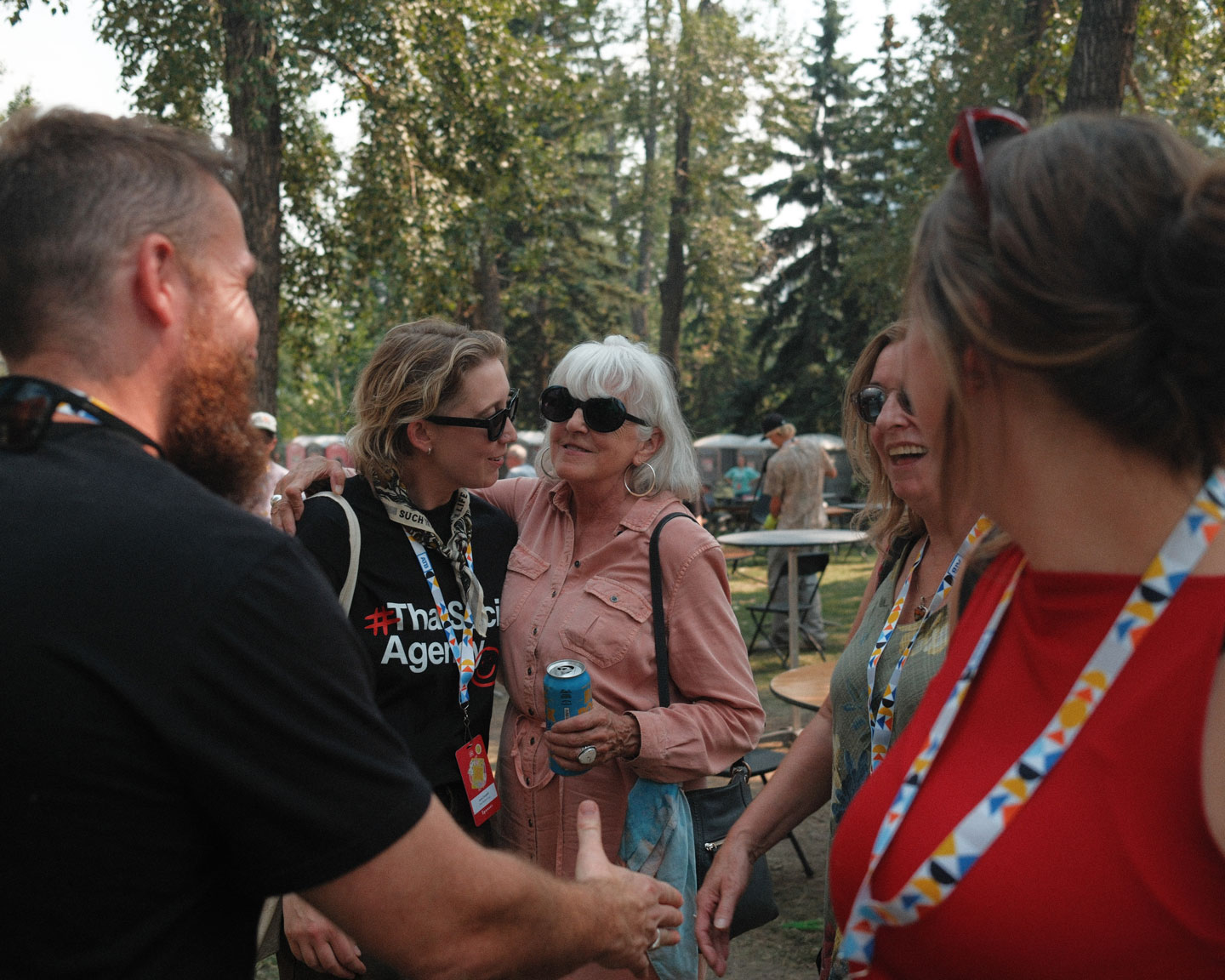
Here's where it compounds. Our branding was on the event itself, so when that thank-you message landed in every sponsor's inbox afterward, our name was in there too. Normally, a name in an inbox is something you glance at and gloss over. This wasn't that, because we'd already talked to them in person, already been introduced, already planted that seed at the event itself. So when our name showed up again, it wasn't a stranger's logo, it was a brand they'd actually just met. That's how we built contacts with the exact audience we wanted, not by capturing their data upfront, but by being visibly, credibly part of the thing they were also part of, twice: once in person, once in the inbox. Same goal as a lead-gen play. Different route to get there, and a lot less obvious that it was one.
When most brands show up in a community's space, the instinct they bring is the funnel instinct: capture, convert, move on. The problem isn't that capturing is wrong. It's that you can walk away with hundreds of email addresses that look great on a report, but are really just unengaged contacts. They didn't ask to hear from you, they don't have a reason to care about your brand, and when you reach out, they don't respond. You captured the email, but you never earned the relationship or the permission that makes that contact valuable. That's the difference between collecting contacts and building a community.
None of this means leads are the enemy or that funnels are bad. Every business needs one. The point is about order and intent. Show up in a community's space to take before you've given, and the taking is the first thing they learn about you. Show up to add, and that becomes the first thing they learn instead. Same activation, opposite signal.
A photo area and a recap video aren't exactly bold ideas. Every brand at every event has some version of them. What made ours a community play instead of a funnel play came down to one question, and it's the question I'd put at the center of any activation: who leaves with the value? Because the answer is legible to everyone watching.
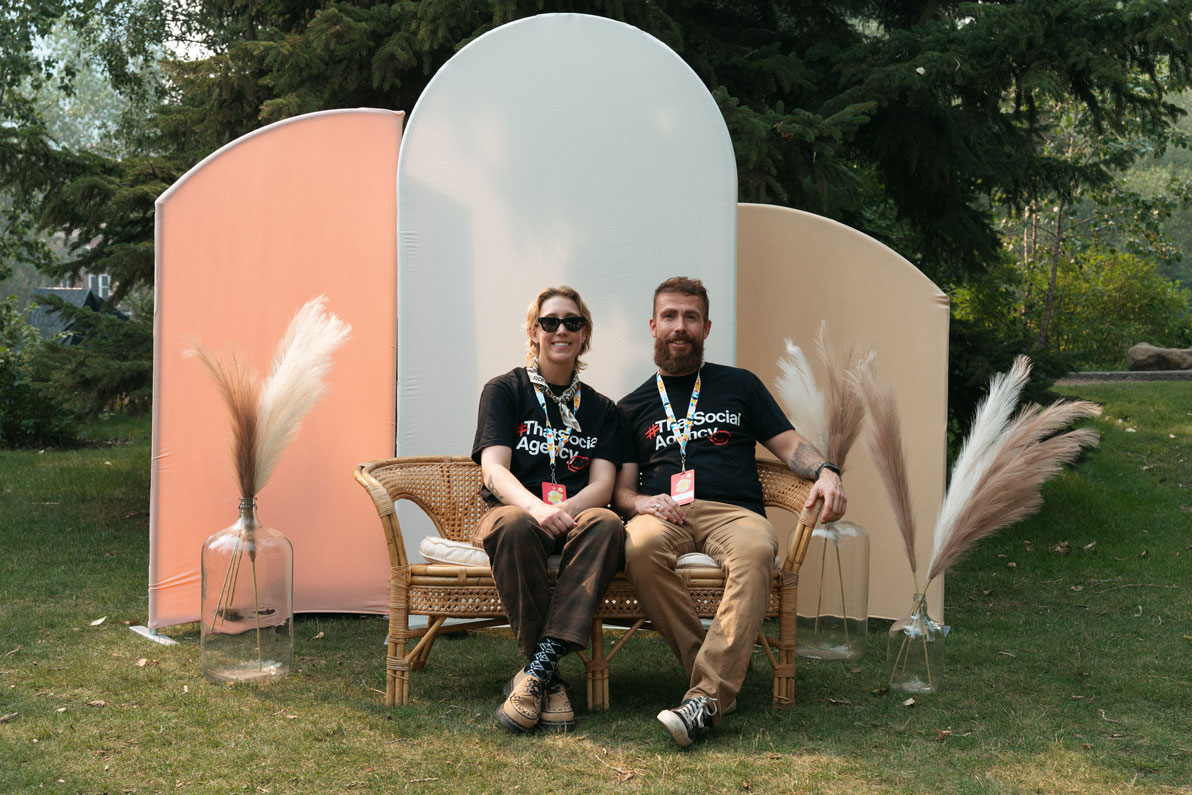
We didn't gate the photo area behind an email capture. You didn't have to scan anything or hand over your data to get your photo, you just got it, as a small gift, something to remember the afternoon by. And after the event, the recap video we produced went back to the attendees so they had something worth sharing themselves.
That's the tell, every time, and communities read it instantly. A funnel activation is built so the brand walks away with something, a list, a lead count. A community activation is built so the people walk away with something first. The conversion still comes, it just comes later, off the back of trust you actually earned, and off a brand that showed people who it is by the way it showed up. Same photobooth, opposite signal about what kind of brand is behind it.
The example that stuck with me this year was Routine Natural Beauty. Their whole setup was considered, logo, colours, the vibe of the tent matched the brand before you even looked at the product. Their activation was a "Tarot & Scent Reading," and it wasn't just a fun idea bolted onto a booth, it came straight from what Routine actually believes: that your scent is like a fingerprint, something that tells a unique story about who you are. The tarot reading was matching people to a scent based on that same idea, treating fragrance as personal and specific rather than something you just pick off a shelf.
That's where the real value shows up. People tried it, and because the reading gave them a story, a connection between a place, a moment, and a scent, they had something worth sharing, not just a product but an experience that meant something to them personally. That's what got them posting and tagging on their own. And that's how Routine ends up with UGC that reaches people exactly where buying decisions get made now, in someone's feed, off the back of someone's real experience, instead of a brand's own promotional post.
Worth noting too: they ran that activation across the entire weekend, not just a few hours like we did. We were there for the Nooner, talking to fellow sponsors. Routine was there the whole festival, talking to their actual consumer audience the entire time. Different scale, different play, and both make sense for what each of us was actually trying to do. What we did was a subtle version of sponsor-to-sponsor relationship building. What Routine did was a subtle version of brand-to-consumer relationship building, done at festival scale, over festival-length time. Same principle, applied to two different audiences.
Two different activations, two different audiences, but the same tactic underneath: give people something worth having, something they actually want to use and share, and let that be what gets you in front of more of ICP. Not the activation itself, the sharing it earns.
The funnel-only mindset sees a group of engaged people and asks, "How do we get in front of them?" The community mindset asks, "Do we actually belong here, and what are we adding?" Those two questions lead to very different activations, and more than that, they leave people with two different impressions of who you are. When a brand asks the first question and skips the second, people feel it, and that feeling sticks to the brand long after the event is over.
If a client came to me wanting to build community through an event activation, and more of them should, this is the seven step gut-check I'd walk them through before we built anything.
None of this means abandoning the funnel. It means earning attention first, so that capturing and converting it later actually works. This doesn't require a bigger budget. It requires a different instinct, earning and keeping attention instead of capturing and converting it. That's the whole shift, and a folk festival tent is as good a place to start as any.
Related Articles
.webp)
This guide is a step-by-step blueprint for consumer product brands looking to turn their happiest customers into powerful brand affiliates. By leveraging social media, brands can create a cost-effective, high-converting affiliate program that generates organic word-of-mouth marketing.